
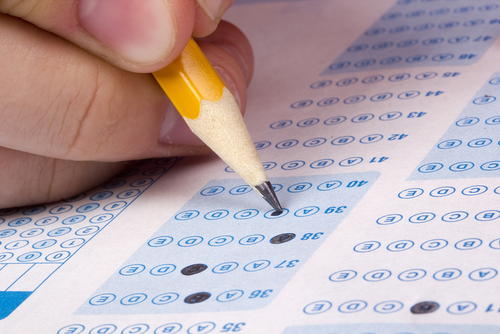
 Why are personality tests such a big deal when it comes to hiring? Are they helping to match employees to see who will get along with whom? Are they supposed to be good gauges of how well an employee will work on a team or on a close deadline? Dr. Wendell Williams says both are bogus. He says there’s little correlation between personality scores and skills. Here’s why:
Personality and KSAs are different. It’s easy to confuse the two, since both come with the same names, like teamwork or drive. But personality scores have almost no bearing on job performance. Personality traits really stick out once you have several employees doing the same work.
Show, don’t tell. The best predictor for hiring somebody is allowing them to show you what they can do, rather than tell you. After all, are applicants always totally honest? (Um, we’d like to think so, at any rate.) Speaking of which…
There’s no fake-proof test. Dr. Wendell Williams believes the only fake-proof test is “The one with no questions.” The only way you’re going to find out if somebody is trying to make themselves look good is by giving them time to look bad. A written personality test won’t measure that.
So personality tests are best used only in workshops, or simply used inconsequentially. Or not at all! The only thing they’re really effective at doing is convincing employers to turn away potentially fantastic applicants.
To read more about Williams’ thoughts on personality tests, click here.
Published by Conselium Executive Search, the global leader in compliance search.