

Corporate compliance is no longer simply a matter of following regulations or responding when a problem occurs. For organizations operating in highly regulated industries, compliance has become an important part of business strategy, risk management, corporate governance, and long-term stability. As regulatory requirements become more complex, companies need experienced leaders who can build effective compliance programs and connect compliance objectives with broader business goals.
A Compliance VP can play a critical role in this process. This senior professional helps organizations identify regulatory risks, strengthen internal controls, promote ethical conduct, oversee compliance initiatives, and provide executive leadership with a clear view of potential risks. By taking a proactive approach, a Compliance VP can help create a culture where compliance is integrated into everyday business decisions rather than treated as a separate function.
Organizations seeking experienced compliance leadership can work with Conselium Compliance Search, a specialized compliance executive search resource to identify professionals with the skills and experience required for senior compliance positions.
What Is a Compliance VP?

A Compliance VP is a senior-level professional responsible for helping an organization develop, manage, and strengthen its compliance strategy. The exact responsibilities can vary depending on the company’s size, industry, regulatory environment, and organizational structure.
In many organizations, the position involves working closely with executive leadership, legal teams, risk management, internal audit, human resources, operations, and other business functions. The Compliance VP may oversee compliance policies, risk assessments, monitoring programs, investigations, employee training, regulatory reporting, and remediation efforts.
More importantly, the role provides strategic direction. Instead of focusing only on individual compliance requirements, a Compliance VP considers how regulatory obligations affect the organization as a whole.
A strong Compliance VP with senior-level compliance leadership experience can therefore help an organization establish a more coordinated and sustainable approach to compliance.
How Does a Compliance VP Strengthen Corporate Compliance?

A Compliance VP strengthens corporate compliance by establishing effective processes, identifying risks early, improving accountability, and ensuring that compliance considerations are included in important business decisions.
Here are several ways the role can make a meaningful difference.
1. Develops a Strategic Compliance Framework
One of the most important responsibilities of a Compliance VP is developing a structured compliance strategy.
A compliance program should not consist of disconnected policies and annual training sessions. It should reflect the organization’s actual risks, operations, regulatory obligations, and business objectives.
A Compliance VP can evaluate the organization’s existing framework and determine whether policies, procedures, controls, reporting structures, and monitoring activities are working together effectively.
This strategic approach can help ensure that compliance resources are focused on the areas where they are most needed.
2. Identifies Regulatory and Operational Risks
Risk identification is another essential component of effective compliance leadership.
Organizations can face risks from changing regulations, employee actions, third-party relationships, business expansion, technology, data handling, financial activities, and operational processes. If these risks are not identified early, they can become more difficult and costly to address.
A Compliance VP can establish risk assessment processes that help management understand:
- Which compliance risks are most significant
- Where existing controls may be insufficient
- Which regulations could affect business operations
- Where additional monitoring may be necessary
- Which risks require immediate escalation
- How compliance risks should be prioritized
This proactive approach allows organizations to address potential problems before they develop into larger compliance failures.
3. Strengthens Policies and Internal Controls
Policies provide employees with direction, but effective compliance requires more than written rules.
A Compliance VP can evaluate whether policies are practical, current, clearly communicated, and supported by appropriate internal controls. The executive can also work with business leaders to identify gaps between written policies and actual business practices.
For example, an organization may have a strong conflict-of-interest policy but lack an effective process for identifying, documenting, and reviewing potential conflicts.
Strong compliance leadership helps connect policies to operational controls. This can include approval procedures, monitoring processes, documentation requirements, segregation of duties, escalation mechanisms, and regular testing.
The objective is to make compliance part of the organization’s operating structure.
4. Builds a Strong Culture of Compliance
Corporate compliance depends heavily on organizational culture.
Employees are more likely to follow compliance requirements when leadership demonstrates that ethical conduct and accountability are genuine business priorities. A Compliance VP can help establish this culture by encouraging open communication, supporting responsible reporting, and reinforcing expectations throughout the organization.
A strong compliance culture should make employees comfortable raising concerns without fearing inappropriate retaliation. It should also make accountability clear when policies are ignored or violations occur.
The Compliance VP can work with executive leaders and managers to ensure that compliance expectations are communicated consistently across departments.
5. Improves Compliance Training and Employee Awareness
Employees cannot follow requirements they do not understand.
A Compliance VP can help ensure that training programs address the actual risks employees face in their roles. Rather than relying exclusively on generic training, organizations can develop role-specific education for employees working in areas such as finance, healthcare, operations, sales, procurement, information security, or other regulated functions.
Effective compliance training can address subjects such as:
- Regulatory responsibilities
- Ethical decision-making
- Conflicts of interest
- Reporting procedures
- Anti-bribery and corruption requirements
- Data protection
- Industry-specific obligations
- Internal policies
- Escalation procedures
Ongoing awareness also helps employees understand that compliance is part of their daily responsibilities rather than something handled exclusively by the compliance department.
6. Oversees Monitoring and Compliance Testing
A compliance program needs regular evaluation to determine whether it is working as intended.
A Compliance VP can oversee monitoring and testing activities designed to identify weaknesses in policies, controls, and business processes. Monitoring can provide valuable information about whether employees and business units are following established requirements.
When weaknesses are identified, the Compliance VP can help determine appropriate corrective actions and establish timelines for remediation.
This creates a continuous improvement process:
Identify → Assess → Monitor → Correct → Review
Such an approach helps organizations respond to compliance weaknesses systematically instead of waiting for regulatory examinations, audits, or incidents to expose them.
7. Supports Effective Investigations and Remediation
Compliance concerns may arise from employee reports, monitoring activities, audits, regulatory inquiries, or other sources.
A Compliance VP can help establish processes for handling these concerns consistently and appropriately. Depending on the organization’s structure, this may involve coordinating with legal counsel, human resources, internal audit, security, or other relevant functions.
Effective investigation and remediation processes should focus on understanding what happened, why it happened, whether similar issues exist elsewhere, and what corrective measures are necessary.
The goal is not simply to resolve an individual incident. It is also to identify underlying weaknesses and prevent similar issues from recurring.
8. Provides Clear Compliance Reporting to Executives and Boards
Senior leaders and boards need meaningful information about compliance risks.
A Compliance VP can translate complex regulatory and operational information into concise reports that help decision-makers understand the organization’s compliance position.
Reporting may include information about:
- Major compliance risks
- Monitoring results
- Significant investigations
- Regulatory developments
- Training completion
- Policy changes
- Remediation activities
- Emerging risks
- Compliance program performance
Effective reporting gives leadership greater visibility into potential issues and helps ensure that significant risks receive appropriate attention.
Why Is a Compliance VP Important for Corporate Governance?
Corporate governance depends on accountability, transparency, oversight, and responsible decision-making. Compliance leadership supports each of these areas.
A Compliance VP can help establish clear responsibilities for managing regulatory risks and ensure that important compliance matters reach the appropriate decision-makers.
This is particularly important for organizations with multiple business units, complex operations, extensive third-party relationships, or significant regulatory obligations.
When compliance information reaches leadership in a timely and understandable manner, executives and boards are better positioned to make informed decisions.
How Can a Compliance VP Reduce Business Risk?
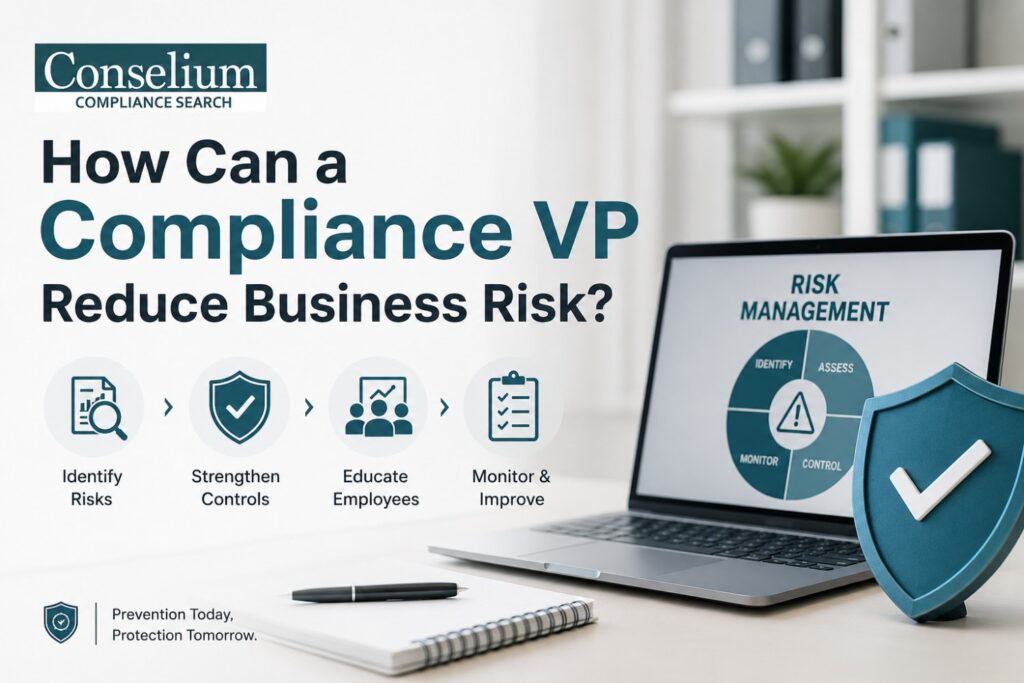
A Compliance VP cannot eliminate every regulatory or operational risk. However, effective compliance leadership can create systems that help an organization identify and manage risks more effectively.
Risk reduction can occur through:
- Proactive regulatory monitoring
- Regular compliance risk assessments
- Strong internal controls
- Employee education
- Ongoing monitoring
- Effective reporting
- Timely investigations
- Corrective action
- Documentation
- Continuous program evaluation
The emphasis should be on prevention and early detection rather than simply reacting after a compliance problem occurs.
What Skills Should a Compliance VP Have?

Finding the right Compliance VP requires more than reviewing a candidate’s regulatory knowledge. Because the role operates at a senior level, organizations should consider a combination of technical expertise, leadership ability, strategic thinking, and business judgment.
Important capabilities may include:
Regulatory Knowledge
The executive should understand the regulatory environment relevant to the organization’s industry and be capable of identifying how regulatory changes may affect operations.
Strategic Thinking
A Compliance VP needs to connect compliance priorities with organizational objectives and determine how compliance resources should be allocated.
Leadership
Senior compliance leaders must influence employees and executives across the organization, even when they do not directly manage every function affected by compliance requirements.
Communication
The ability to explain complex regulatory issues in clear business language is essential when working with executives, employees, regulators, and boards.
Risk Management
Strong risk assessment and prioritization skills help organizations focus on the most significant areas of potential exposure.
Ethical Judgment
Compliance leadership requires sound judgment, independence, integrity, and the ability to address difficult issues objectively.
When Should a Company Consider Hiring a Compliance VP?
Not every organization requires the same level of compliance leadership. However, certain circumstances may indicate that additional senior oversight is needed.
Companies may consider a Compliance VP when they experience:
- Rapid organizational growth
- Increasing regulatory complexity
- Expansion into new markets
- Operations across multiple jurisdictions
- Significant changes in products or services
- Increased regulatory scrutiny
- Repeated compliance concerns
- Weak compliance reporting
- Major mergers or acquisitions
- Increased board-level compliance oversight
The right timing depends on the organization’s risk profile, size, industry, and strategic objectives.
How Can Companies Find the Right Compliance VP?
Hiring a senior compliance executive requires a targeted evaluation of both technical and leadership capabilities. A candidate may have extensive regulatory knowledge but lack the executive communication or strategic judgment required to lead a complex compliance program.
Organizations should consider a candidate’s:
- Industry experience
- Regulatory expertise
- Leadership history
- Compliance program experience
- Risk management capabilities
- Communication skills
- Investigative experience
- Executive presence
- Business understanding
- Cultural alignment
Working with a specialized search organization can help employers identify candidates who meet both the technical and leadership requirements of the position.
Conselium Compliance Search provides specialized compliance executive search expertise for organizations looking to identify qualified professionals for important compliance leadership roles.
Key Takeaways
A Compliance VP can strengthen corporate compliance by making compliance a strategic part of organizational management.
The most important contributions include:
- Building a structured compliance framework
- Identifying regulatory and operational risks
- Strengthening policies and internal controls
- Developing a culture of ethical conduct
- Improving employee training and awareness
- Overseeing monitoring and testing
- Supporting investigations and remediation
- Providing meaningful reporting to executives and boards
- Helping integrate compliance into business decision-making
Strong compliance leadership does not simply focus on avoiding regulatory problems. It creates systems that help organizations understand risk, respond to issues, maintain accountability, and operate responsibly.
Frequently Asked Questions About Compliance VP Leadership
What does a Compliance VP do?
A Compliance VP provides senior-level oversight of an organization’s compliance strategy. Responsibilities can include regulatory risk management, policy development, internal controls, compliance monitoring, training, investigations, reporting, and supporting ethical business practices.
How does a Compliance VP strengthen corporate compliance?
A Compliance VP strengthens corporate compliance by identifying risks, improving controls, developing effective policies, supporting employee awareness, monitoring compliance activities, addressing issues, and providing leadership with clear information about compliance risks.
What is the difference between a Compliance VP and a Compliance Officer?
Titles and organizational structures differ between companies. Generally, a Compliance VP is a senior leadership role with broader strategic responsibilities, while a Compliance Officer may focus more heavily on operational compliance activities or specific areas of the compliance program.
What skills should a Compliance VP have?
A strong Compliance VP typically needs regulatory knowledge, strategic thinking, leadership ability, communication skills, risk management expertise, ethical judgment, investigative capabilities, and strong business understanding.
Why is a Compliance VP important for corporate governance?
A Compliance VP can strengthen corporate governance by improving accountability, regulatory oversight, risk reporting, ethical decision-making, and communication between compliance functions and executive or board leadership.
When should a company hire a Compliance VP?
Companies may consider hiring a Compliance VP when regulatory complexity, organizational growth, business expansion, risk exposure, or increased compliance responsibilities require greater senior-level oversight.
Need Help Finding the Right Compliance Leadership?
The right compliance executive can make a significant difference in how effectively an organization identifies risks, manages regulatory responsibilities, and maintains a strong culture of accountability.
If your organization is looking for experienced compliance leadership, contact Conselium’s compliance executive search professionals to discuss your hiring requirements and identify qualified candidates aligned with your organization’s compliance needs.
Published by Conselium Executive Search, the global leader in compliance search.