Healthcare organizations operate in one of the most highly regulated business environments. Hospitals, health systems, pharmaceutical companies, medical device manufacturers, insurers, and other healthcare organizations must comply with complex regulations while protecting patients, managing sensitive information, and maintaining ethical business practices. As these responsibilities continue to expand, the demand for professionals with specialized compliance expertise is also increasing.
But what skills are needed to succeed in growing healthcare compliance jobs?
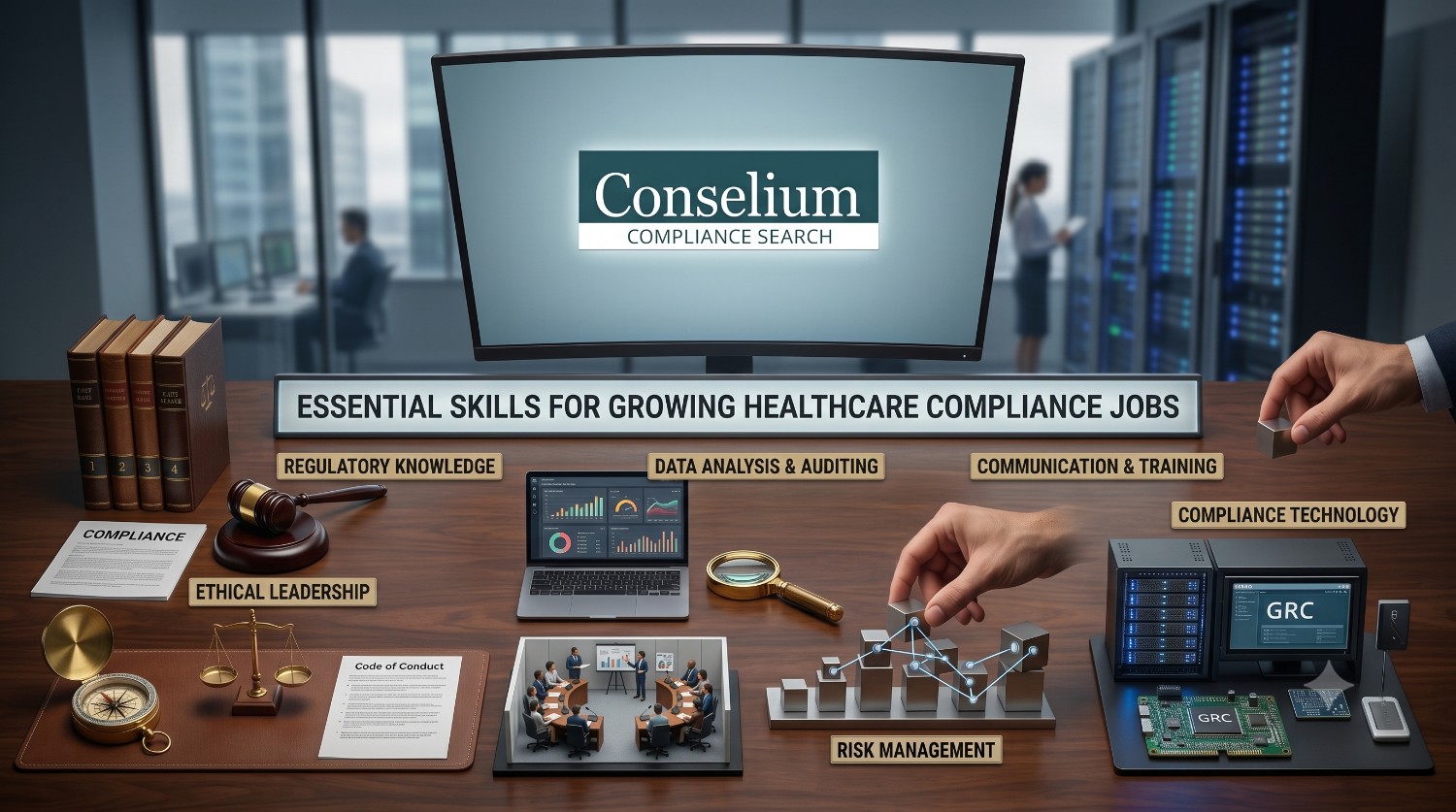
The answer goes beyond knowing regulations. Modern healthcare compliance professionals need a combination of regulatory knowledge, analytical thinking, communication, ethical judgment, technology awareness, problem-solving ability, and business understanding. Employers increasingly seek professionals who can identify risks, communicate recommendations clearly, work across departments, and help organizations build effective compliance programs.
For organizations seeking qualified professionals, Specialized Healthcare Compliance Executive Search Services can provide focused recruitment support for demanding compliance and regulated-industry positions.
Why Are Healthcare Compliance Skills Becoming More Important?
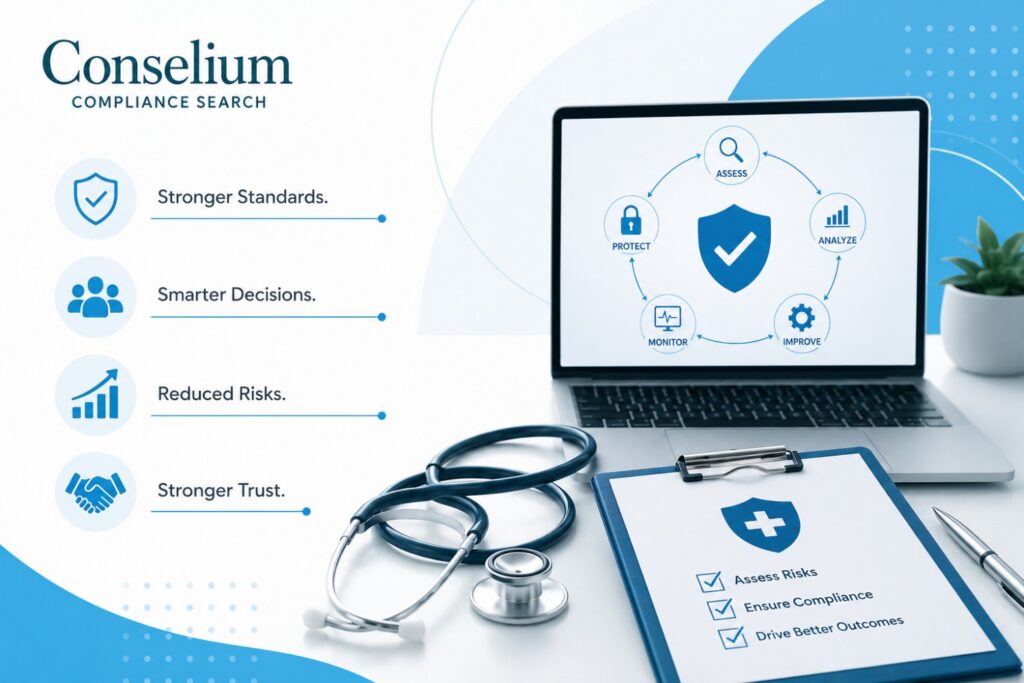
Healthcare compliance is no longer limited to reviewing policies and checking whether employees follow procedures. Compliance teams increasingly participate in risk management, internal investigations, auditing, privacy, corporate governance, training, cybersecurity, and strategic decision-making.
Healthcare organizations also face an evolving regulatory environment. Changes in technology, patient data management, healthcare delivery models, reimbursement practices, cybersecurity, and regulatory enforcement can create new risks.
As a result, organizations need professionals who can interpret regulatory requirements and turn them into practical business processes.
A strong healthcare compliance professional should be able to answer questions such as:
- What are the organization’s most significant compliance risks?
- Are current policies aligned with applicable requirements?
- Are employees receiving appropriate compliance training?
- How should potential violations be investigated?
- Are internal controls operating effectively?
- What corrective actions should management consider?
- How can new technology affect compliance risk?
These responsibilities demonstrate why healthcare compliance requires a broad and continuously developing skill set.
1. Strong Knowledge of Healthcare Regulations
Regulatory knowledge is one of the most fundamental skills required for healthcare compliance jobs. Professionals need to understand the regulations and standards relevant to their specific organization and position.
Depending on the role, employers may seek experience involving healthcare privacy, fraud and abuse, billing and reimbursement, patient safety, pharmaceutical regulations, medical devices, government healthcare programs, or other regulatory requirements.
However, knowing regulations is only the beginning. Professionals must also understand how those requirements apply to real-world situations.
For example, a compliance professional may need to evaluate whether a vendor relationship creates regulatory risk, determine whether an internal process requires additional controls, or advise management about a potential compliance concern.
The ability to interpret requirements and provide practical recommendations is therefore highly valuable.
2. Risk Assessment and Analytical Skills
Healthcare compliance professionals must be able to identify, evaluate, and prioritize risks.
Strong analytical skills allow professionals to review policies, audit findings, incident reports, operational information, and other data to determine where compliance weaknesses may exist.
Effective risk assessment involves asking:
- What happened?
- Why did it happen?
- What regulatory or operational risks resulted?
- How significant is the risk?
- What controls could reduce the risk?
- How should the organization monitor the issue?
Professionals who can analyze information objectively and develop evidence-based recommendations can provide significant value to healthcare organizations.
Analytical thinking is particularly important for compliance managers and directors who must prioritize competing risks and communicate their findings to senior leadership.
3. Effective Communication
Communication is one of the most important soft skills in healthcare compliance.
Compliance professionals regularly interact with executives, physicians, nurses, legal teams, finance departments, human resources professionals, information technology teams, and operational leaders.
A compliance recommendation is only effective when people understand it and know how to implement it.
Professionals must therefore explain complex regulatory requirements in clear, practical language. They may need to prepare reports, deliver training sessions, write policies, present risk assessments, or advise senior executives.
Senior compliance leaders also need strong presentation skills because they may communicate significant compliance risks to executive leadership or boards.
The ability to communicate clearly, professionally, and objectively can distinguish an effective compliance professional from someone who only possesses technical regulatory knowledge.
4. Ethical Judgment and Professional Integrity
Healthcare compliance professionals frequently deal with sensitive matters, including suspected misconduct, privacy concerns, conflicts of interest, employee complaints, and potential regulatory violations.
Strong ethical judgment helps professionals evaluate these situations objectively.
Employers need individuals who can maintain confidentiality, avoid conflicts of interest, document concerns accurately, and escalate serious issues appropriately.
Integrity is particularly important in leadership roles. Compliance officers and directors often serve as trusted advisors to management and must be willing to communicate difficult information even when it may be uncomfortable.
A strong compliance culture depends on professionals who demonstrate consistency, independence, and sound judgment.
5. Investigation and Problem-Solving Skills
Healthcare organizations may receive employee complaints, audit findings, whistleblower reports, regulatory inquiries, or other indications of potential violations.
Compliance professionals need investigation skills to determine what happened and whether corrective action is necessary.
Investigation responsibilities may involve:
- Reviewing documentation and records
- Conducting interviews
- Evaluating policies and procedures
- Identifying control weaknesses
- Documenting findings
- Coordinating with legal or other internal teams
- Recommending corrective actions
Problem-solving skills are equally important after an investigation.
A strong compliance professional does not simply identify a violation. They help determine why it occurred and what changes could reduce the likelihood of recurrence.
6. Technology and Data Literacy
Technology is playing a larger role in healthcare compliance.
Organizations generate substantial amounts of patient, operational, financial, and regulatory data. Compliance teams may use technology to monitor transactions, manage training, track incidents, support audits, analyze risks, and maintain documentation.
Professionals who understand compliance technology and data analytics can help organizations identify trends and potential issues more efficiently.
This does not mean every healthcare compliance professional needs to be a programmer or data scientist. However, basic data literacy and an understanding of digital compliance tools can provide a significant career advantage.
Technology awareness is particularly valuable as healthcare organizations adopt artificial intelligence, cloud platforms, digital health solutions, and other emerging technologies.
7. Attention to Detail
Compliance often depends on details.
An incomplete record, incorrect report, missing approval, inconsistent procedure, or overlooked policy requirement can create substantial regulatory or operational risk.
Strong attention to detail helps professionals identify discrepancies and ensure that compliance documentation is accurate.
However, effective professionals must balance detail orientation with broader strategic thinking. Compliance leaders need to understand individual issues while also recognizing how those issues affect organizational risk.
8. Business and Operational Understanding
Healthcare compliance professionals increasingly need to understand how their organizations operate.
Compliance recommendations should be practical and capable of being implemented within real operational environments.
Understanding finance, operations, human resources, procurement, information technology, clinical workflows, and other business functions allows compliance professionals to collaborate more effectively with internal stakeholders.
This business knowledge becomes even more important for compliance directors and executives who participate in strategic planning and organizational decision-making.
The strongest compliance professionals understand that effective compliance is not simply about saying “no.” It is about helping organizations achieve legitimate objectives while managing regulatory and ethical risks responsibly.
9. Adaptability and Continuous Learning
Healthcare compliance is constantly evolving.
Regulatory priorities can change, new technologies can introduce unfamiliar risks, and healthcare organizations can adopt new business models and operational processes.
For this reason, adaptability is an essential skill.
Professionals should continuously update their knowledge through professional education, regulatory research, industry publications, training, networking, and relevant certifications.
Employers often value candidates who demonstrate a genuine commitment to continuous learning because compliance professionals cannot rely solely on knowledge gained earlier in their careers.
10. Leadership and Collaboration
Leadership is especially important for senior healthcare compliance positions.
Compliance professionals often need to influence employees and executives without having direct authority over them. They may need to persuade business leaders to strengthen controls, encourage employees to follow new procedures, and coordinate responses involving several departments.
Collaboration is therefore critical.
Compliance should not operate as an isolated function. Effective compliance programs require cooperation among compliance, legal, finance, human resources, information technology, operations, clinical teams, and executive leadership.
Strong interpersonal and leadership skills allow compliance professionals to build trust and encourage shared accountability.
How Can Candidates Prepare for Growing Healthcare Compliance Jobs?
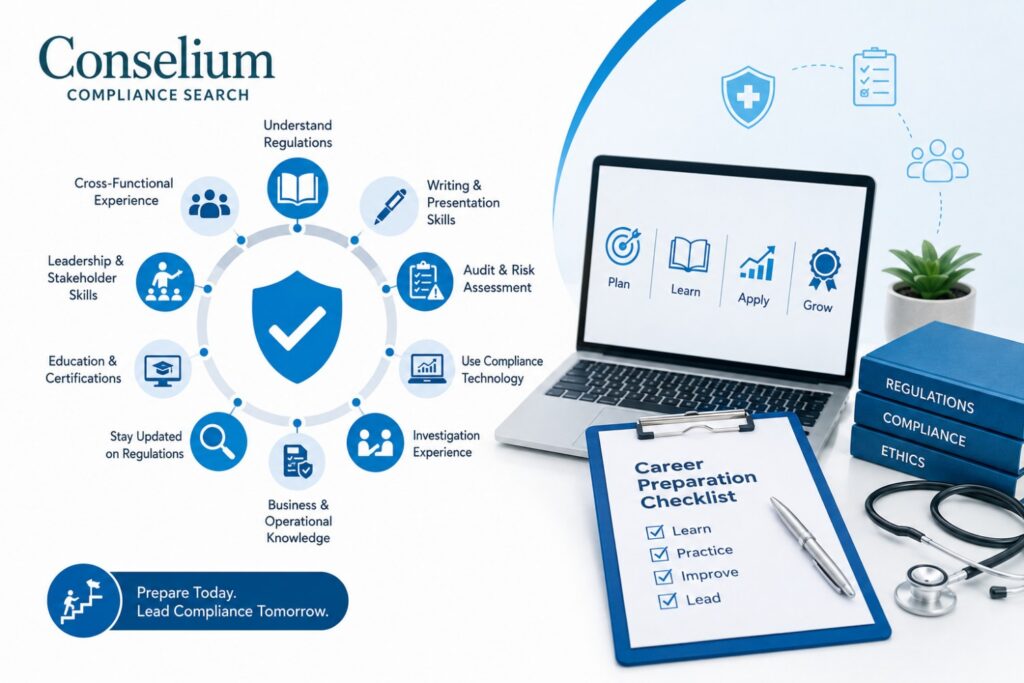
Professionals interested in healthcare compliance should develop both technical and interpersonal capabilities.
A practical career development strategy can include:
- Building knowledge of healthcare regulations
- Developing auditing and risk assessment skills
- Strengthening professional writing and presentation abilities
- Learning how compliance technology is used
- Gaining investigation experience
- Developing business and operational knowledge
- Pursuing relevant professional education or certifications
- Staying current with regulatory developments
- Building leadership and stakeholder-management skills
- Developing cross-functional experience
Candidates should also communicate their experience clearly when applying for positions.
Rather than simply stating “compliance experience,” professionals can demonstrate their value by explaining the types of audits they supported, risks they identified, investigations they conducted, compliance programs they managed, or corrective actions they helped implement.
What Do Employers Look for in Healthcare Compliance Candidates?

Employers typically seek a combination of technical knowledge, practical experience, communication skills, and professional judgment.
For entry- and mid-level positions, regulatory knowledge, analytical ability, attention to detail, and relevant healthcare experience may be particularly important.
For senior positions, organizations may place greater emphasis on leadership, strategic thinking, executive communication, risk management, and the ability to build a strong compliance culture.
This makes specialized recruitment particularly valuable.
A recruiter who understands compliance can evaluate candidates based on more than job titles. They can consider the depth of a candidate’s regulatory knowledge, industry experience, leadership capabilities, and ability to address the specific compliance challenges associated with a position.
Professionals can also review Current Healthcare Compliance Jobs and Career Opportunities to see the types of positions available and understand the skills and experience employers are seeking.
Why Does Specialized Compliance Recruiting Matter?
Recruiting for healthcare compliance positions can be challenging because qualified candidates often have specialized backgrounds.
A general recruitment process may identify candidates with legal, healthcare, audit, or risk-management experience without fully determining whether they possess the specific compliance expertise required for the role.
Specialized compliance recruiting can help organizations define job requirements, identify qualified professionals, evaluate relevant experience, and conduct a more targeted search.
For executive and senior-level positions, confidentiality can also be important. Organizations may need to replace a leader discreetly or identify candidates who are not actively searching for a new position.
A specialized search partner can help organizations reach professionals with the right combination of regulatory knowledge, healthcare experience, leadership ability, and business judgment.
Frequently Asked Questions About Healthcare Compliance Skills
What skills are most important for healthcare compliance jobs?
The most important skills generally include regulatory knowledge, risk assessment, analytical thinking, communication, ethical judgment, investigation, problem-solving, attention to detail, technology awareness, business knowledge, adaptability, and leadership.
Do healthcare compliance professionals need technology skills?
Yes. Technology is increasingly used for compliance monitoring, auditing, reporting, training, risk analysis, and documentation. Professionals should understand how digital tools and data can support compliance activities.
Why is communication important in healthcare compliance?
Compliance professionals must explain regulations, policies, risks, and corrective actions to employees, managers, executives, and other stakeholders. Clear communication helps organizations implement compliance requirements effectively.
What qualifications are useful for healthcare compliance careers?
Qualifications vary by position. Relevant education, healthcare experience, regulatory knowledge, auditing or investigation experience, professional certifications, and industry-specific compliance experience can strengthen a candidate’s profile.
Are leadership skills necessary for senior healthcare compliance roles?
Yes. Compliance directors and executive-level professionals often manage teams, advise senior leadership, oversee compliance programs, communicate significant risks, and influence organizational decisions.
How can employers find qualified healthcare compliance professionals?
Employers can partner with a specialized compliance recruitment firm that understands healthcare regulations, compliance functions, and the leadership requirements associated with senior compliance positions.
Conclusion: Which Skills Will Define the Future of Healthcare Compliance?
The future of healthcare compliance will require professionals who can combine regulatory expertise with business judgment, analytical thinking, communication, and leadership.
Regulatory knowledge remains essential, but employers increasingly need professionals who can identify risks, investigate concerns, use technology, collaborate across departments, and develop practical solutions.
As healthcare organizations become more complex and compliance expectations continue to evolve, professionals who continually develop these capabilities can position themselves for long-term career opportunities.
For employers, finding these professionals requires a focused approach to compliance recruitment. Working with an experienced search partner can help organizations identify candidates whose skills align with both immediate requirements and long-term compliance objectives.
For specialized hiring support, Specialized Healthcare Compliance Executive Search Services can help organizations identify qualified compliance professionals across regulated industries.
Ready to Strengthen Your Healthcare Compliance Team?
Finding the right compliance professional requires more than reviewing resumes. It requires an understanding of regulatory expertise, healthcare experience, leadership capability, and organizational requirements.
Connect With a Specialized Compliance Officer Recruiting Team to discuss your organization’s compliance hiring requirements and identify qualified professionals who can support your compliance goals.
Published by Conselium Executive Search, the global leader in compliance search.