
The healthcare industry operates within one of the most heavily regulated environments in the world. Healthcare organizations must comply with federal regulations, state laws, privacy requirements, billing standards, quality measures, and ethical guidelines. As regulatory expectations continue to evolve, employers are actively seeking professionals with specialized skills who can help organizations manage risk, maintain compliance, and foster ethical business practices.
The demand for qualified professionals in healthcare compliance continues to grow across hospitals, pharmaceutical companies, medical device manufacturers, healthcare technology firms, insurance providers, and physician practice groups. As a result, professionals pursuing healthcare compliance careers must possess a combination of technical expertise, regulatory knowledge, leadership capabilities, and communication skills.
At Conselium Compliance Search, a nationally recognized compliance executive search firm, we work closely with organizations seeking top compliance talent and candidates looking to advance their careers. Understanding the skills employers value most can help compliance professionals stand out in a competitive marketplace and secure rewarding opportunities through leading healthcare compliance jobs and career opportunities.
Why Healthcare Compliance Professionals Are in High Demand
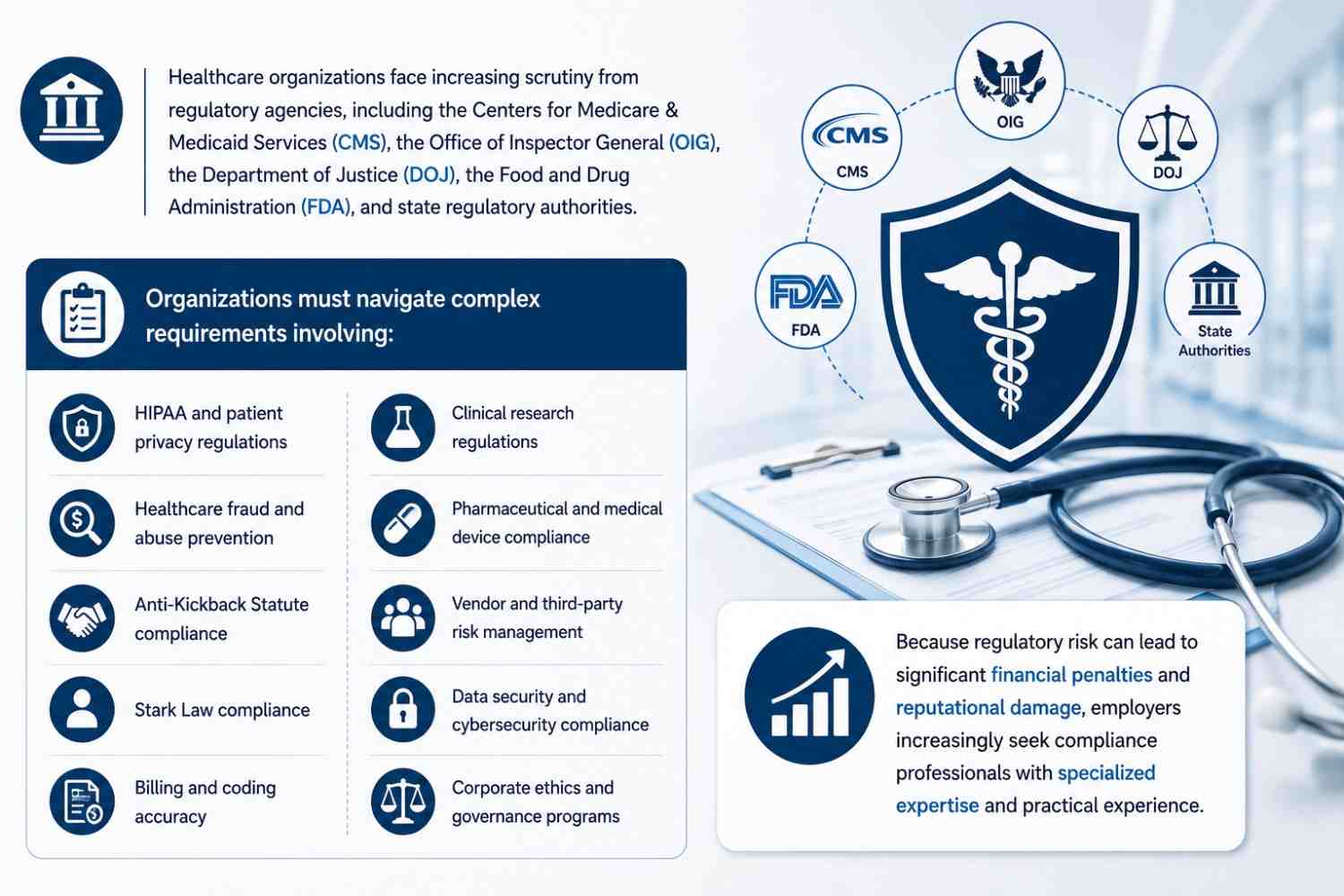
Healthcare organizations face increasing scrutiny from regulatory agencies, including the Centers for Medicare & Medicaid Services (CMS), the Office of Inspector General (OIG), the Department of Justice (DOJ), the Food and Drug Administration (FDA), and state regulatory authorities.
Organizations must navigate complex requirements involving:
- HIPAA and patient privacy regulations
- Healthcare fraud and abuse prevention
- Anti-Kickback Statute compliance
- Stark Law compliance
- Billing and coding accuracy
- Clinical research regulations
- Pharmaceutical and medical device compliance
- Vendor and third-party risk management
- Data security and cybersecurity compliance
- Corporate ethics and governance programs
Because regulatory risk can lead to significant financial penalties and reputational damage, employers increasingly seek compliance professionals with specialized expertise and practical experience.
Skills Employers Value Most in Healthcare Compliance Jobs
-
Deep Understanding of Healthcare Regulations

Healthcare employers prioritize candidates with comprehensive knowledge of regulatory frameworks affecting healthcare operations.
Key areas of expertise include:
- HIPAA compliance
- HITECH requirements
- Anti-Kickback Statute
- Stark Law
- False Claims Act
- Medicare and Medicaid regulations
- FDA compliance requirements
- Clinical trial regulations
- OIG guidance and enforcement trends
Professionals who stay current on evolving regulations demonstrate their ability to help organizations proactively identify and mitigate compliance risks.
-
Risk Assessment and Risk Management Expertise
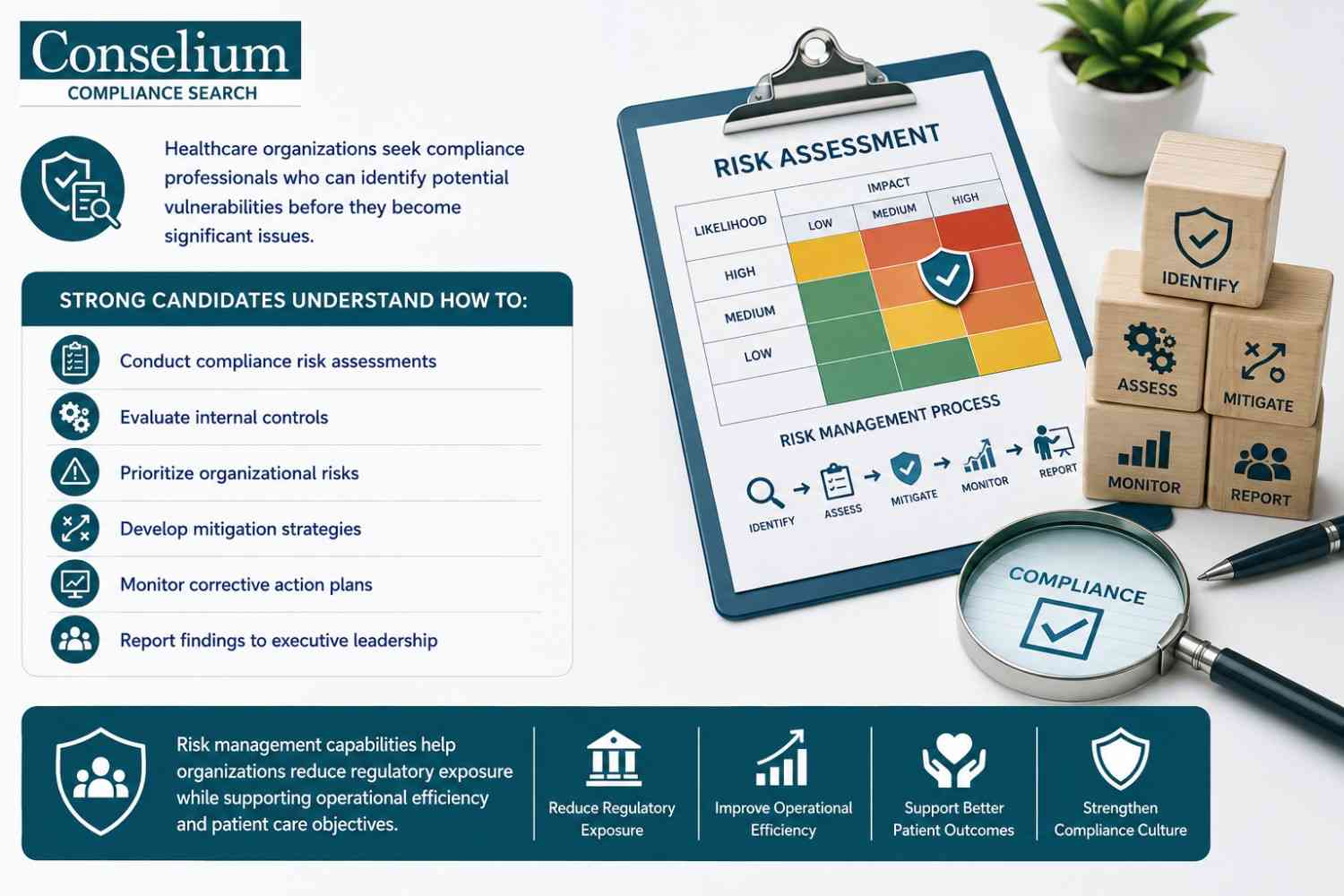 Healthcare organizations seek compliance professionals who can identify potential vulnerabilities before they become significant issues.
Strong candidates understand how to:
- Conduct compliance risk assessments
- Evaluate internal controls
- Prioritize organizational risks
- Develop mitigation strategies
- Monitor corrective action plans
- Report findings to executive leadership
Risk management capabilities help organizations reduce regulatory exposure while supporting operational efficiency and patient care objectives.
-
Investigation and Problem-Solving Skills

Employers highly value professionals who can conduct thorough internal investigations and resolve compliance concerns effectively.
Successful compliance professionals know how to:
- Gather and analyze evidence
- Conduct employee interviews
- Document findings
- Evaluate regulatory implications
- Recommend corrective actions
- Collaborate with legal and HR teams
Strong investigative skills help organizations address issues quickly and maintain regulatory integrity.
-
Data Analytics and Compliance Monitoring
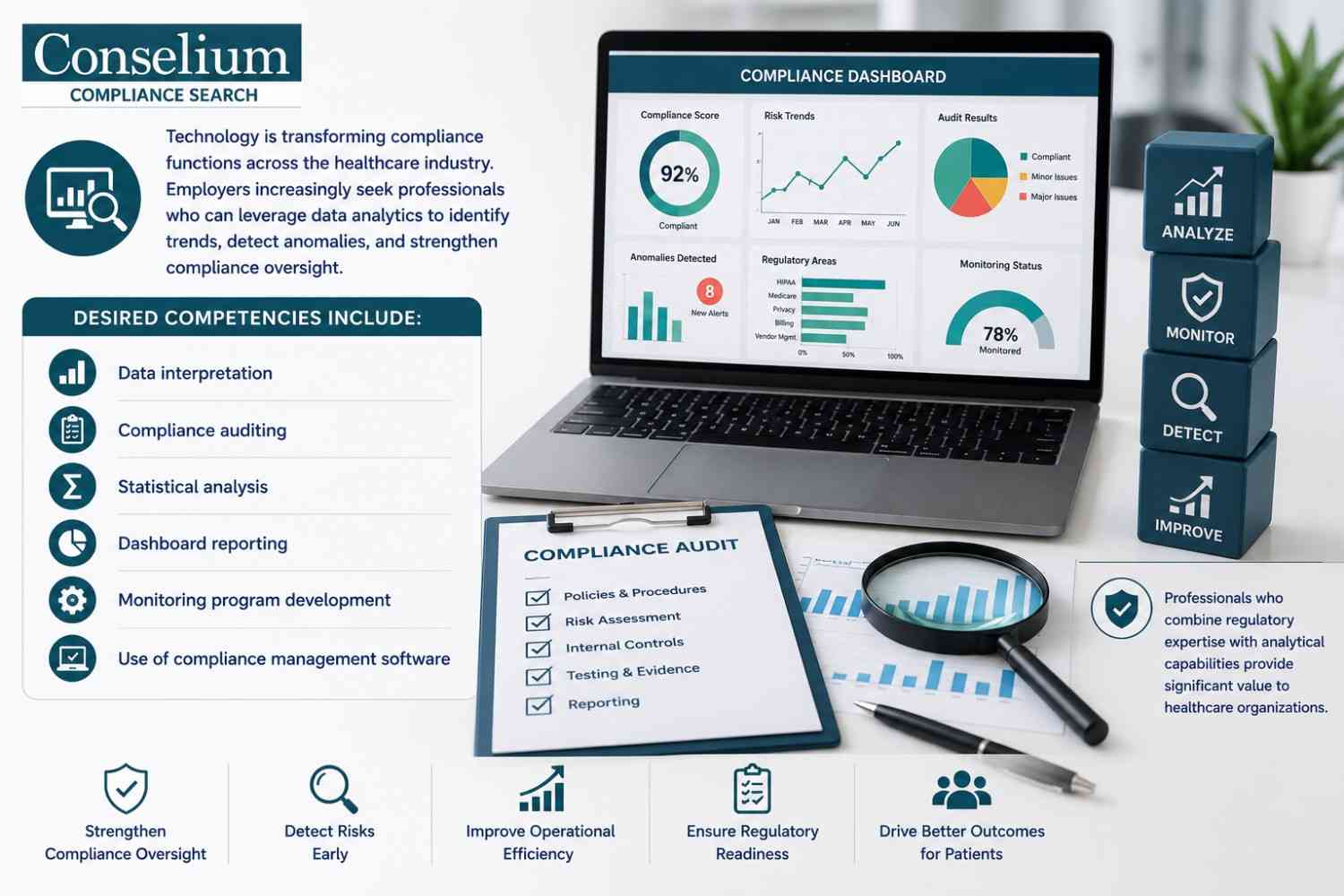
Technology is transforming compliance functions across the healthcare industry. Employers increasingly seek professionals who can leverage data analytics to identify trends, detect anomalies, and strengthen compliance oversight.
Desired competencies include:
- Data interpretation
- Compliance auditing
- Statistical analysis
- Dashboard reporting
- Monitoring program development
- Use of compliance management software
Professionals who combine regulatory expertise with analytical capabilities provide significant value to healthcare organizations.
-
Healthcare Privacy and Data Protection Knowledge
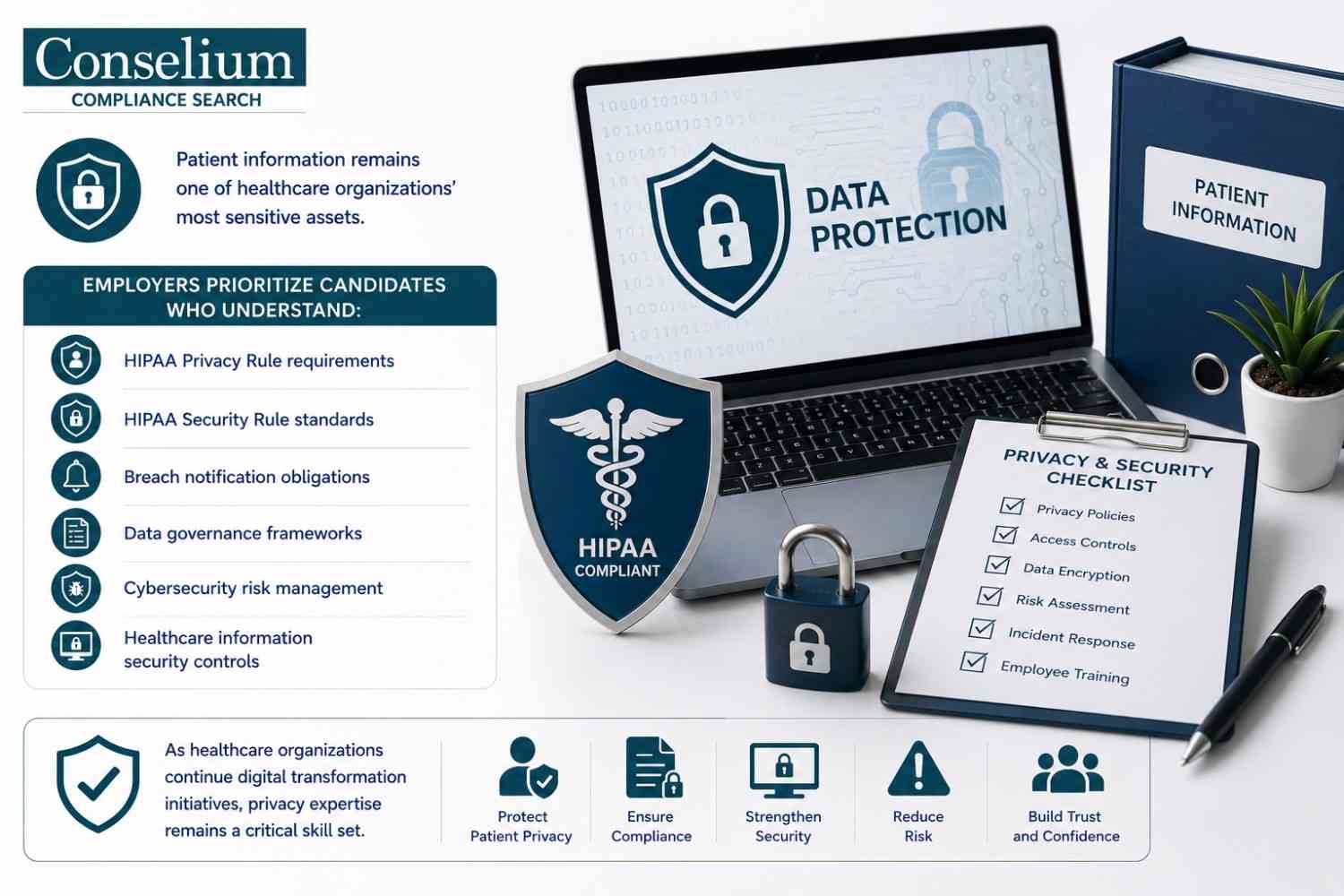
Patient information remains one of healthcare organizations’ most sensitive assets.
Employers prioritize candidates who understand:
- HIPAA Privacy Rule requirements
- HIPAA Security Rule standards
- Breach notification obligations
- Data governance frameworks
- Cybersecurity risk management
- Healthcare information security controls
As healthcare organizations continue digital transformation initiatives, privacy expertise remains a critical skill set.
-
Strong Communication Skills

Compliance professionals frequently interact with executives, clinicians, regulators, legal teams, and employees.
Effective communication skills enable professionals to:
- Explain complex regulations clearly
- Deliver training programs
- Present compliance reports
- Conduct interviews
- Lead investigations
- Build trust across departments
Organizations value candidates who can translate regulatory requirements into practical business guidance.
-
Compliance Training and Education Expertise

A successful compliance program depends on employee awareness and accountability.
Healthcare employers seek professionals who can:
- Develop compliance training materials
- Deliver engaging education sessions
- Evaluate training effectiveness
- Promote ethical decision-making
- Strengthen compliance culture
Training expertise helps organizations reduce misconduct and improve regulatory adherence.
-
Leadership and Program Management Skills
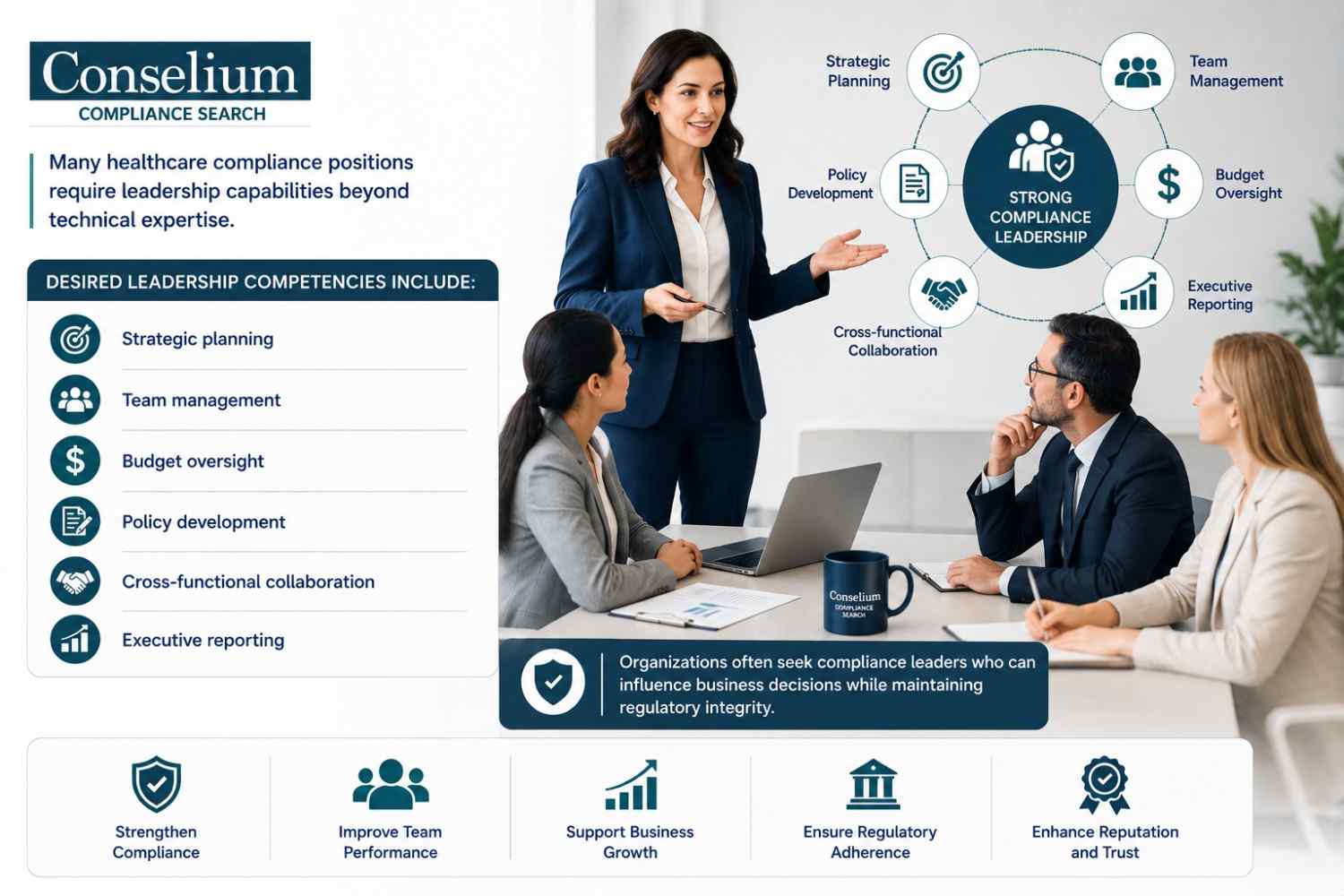
Many healthcare compliance positions require leadership capabilities beyond technical expertise.
Desired leadership competencies include:
- Strategic planning
- Team management
- Budget oversight
- Policy development
- Cross-functional collaboration
- Executive reporting
Organizations often seek compliance leaders who can influence business decisions while maintaining regulatory integrity.
-
Auditing and Monitoring Experience
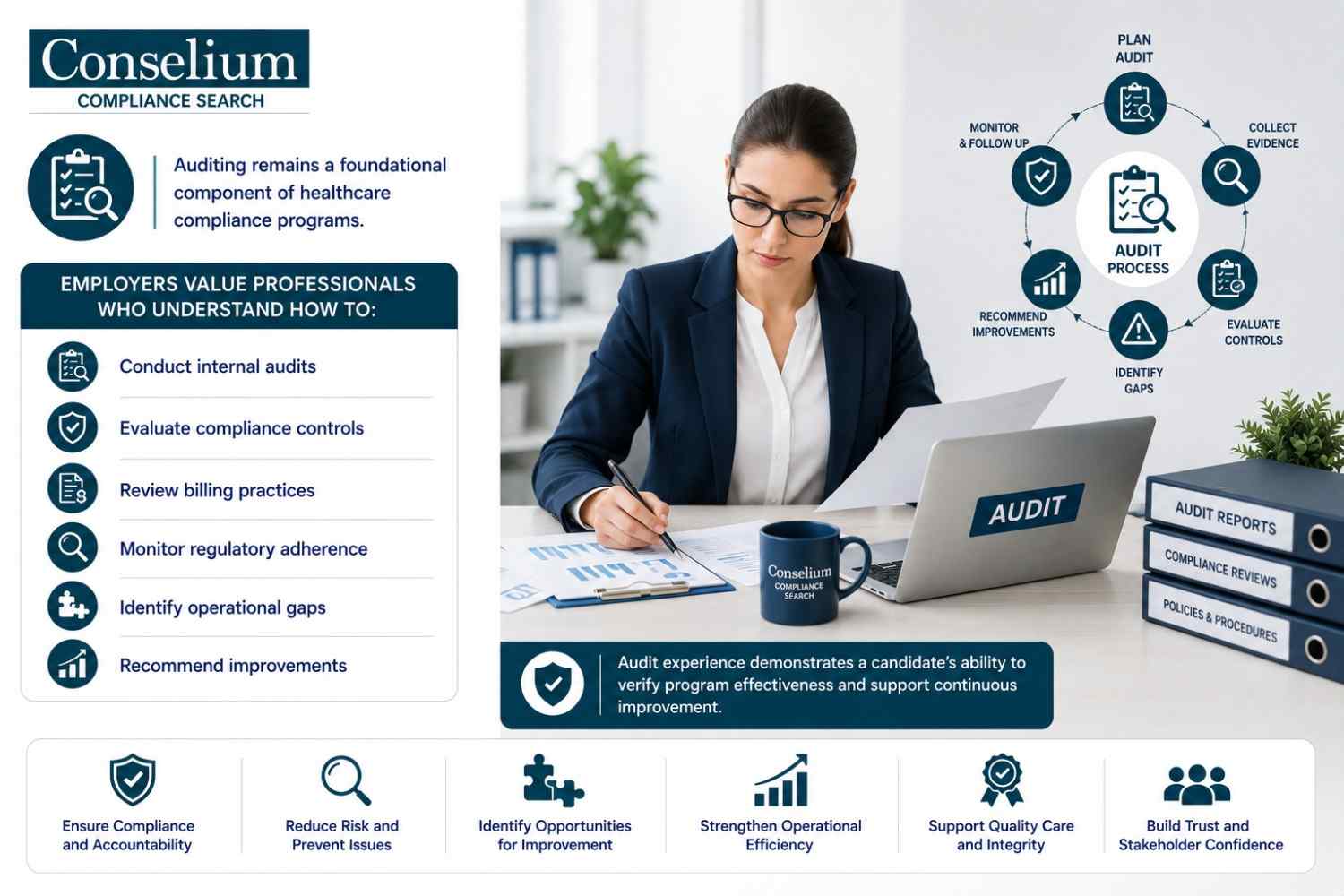
Auditing remains a foundational component of healthcare compliance programs.
Employers value professionals who understand how to:
- Conduct internal audits
- Evaluate compliance controls
- Review billing practices
- Monitor regulatory adherence
- Identify operational gaps
- Recommend improvements
Audit experience demonstrates a candidate’s ability to verify program effectiveness and support continuous improvement.
-
Ethical Judgment and Professional Integrity
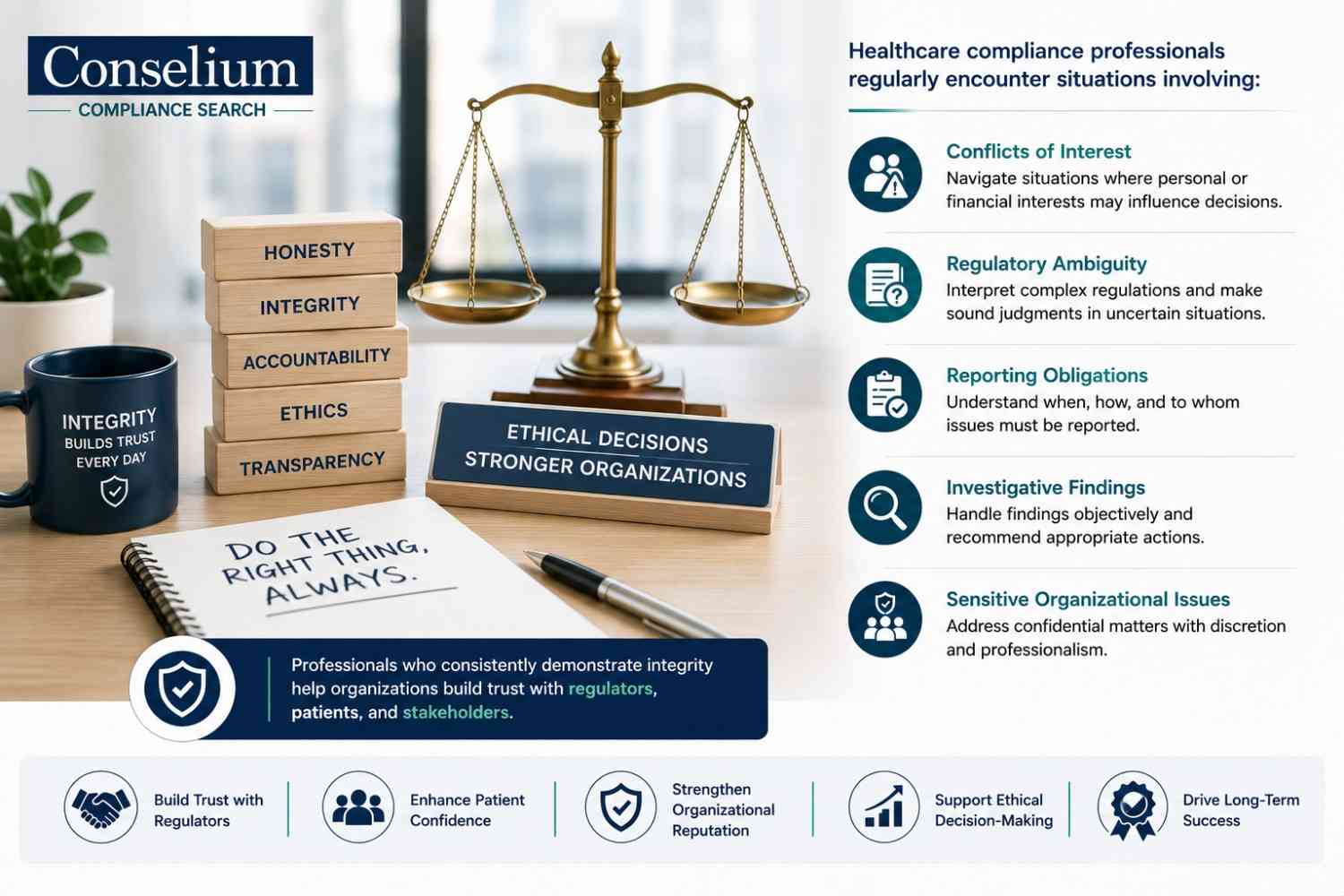
Perhaps the most important quality employers seek is strong ethical judgment.
Healthcare compliance professionals regularly encounter situations involving:
- Conflicts of interest
- Regulatory ambiguity
- Reporting obligations
- Investigative findings
- Sensitive organizational issues
Professionals who consistently demonstrate integrity help organizations build trust with regulators, patients, and stakeholders.
Emerging Skills Shaping the Future of Healthcare Compliance Jobs
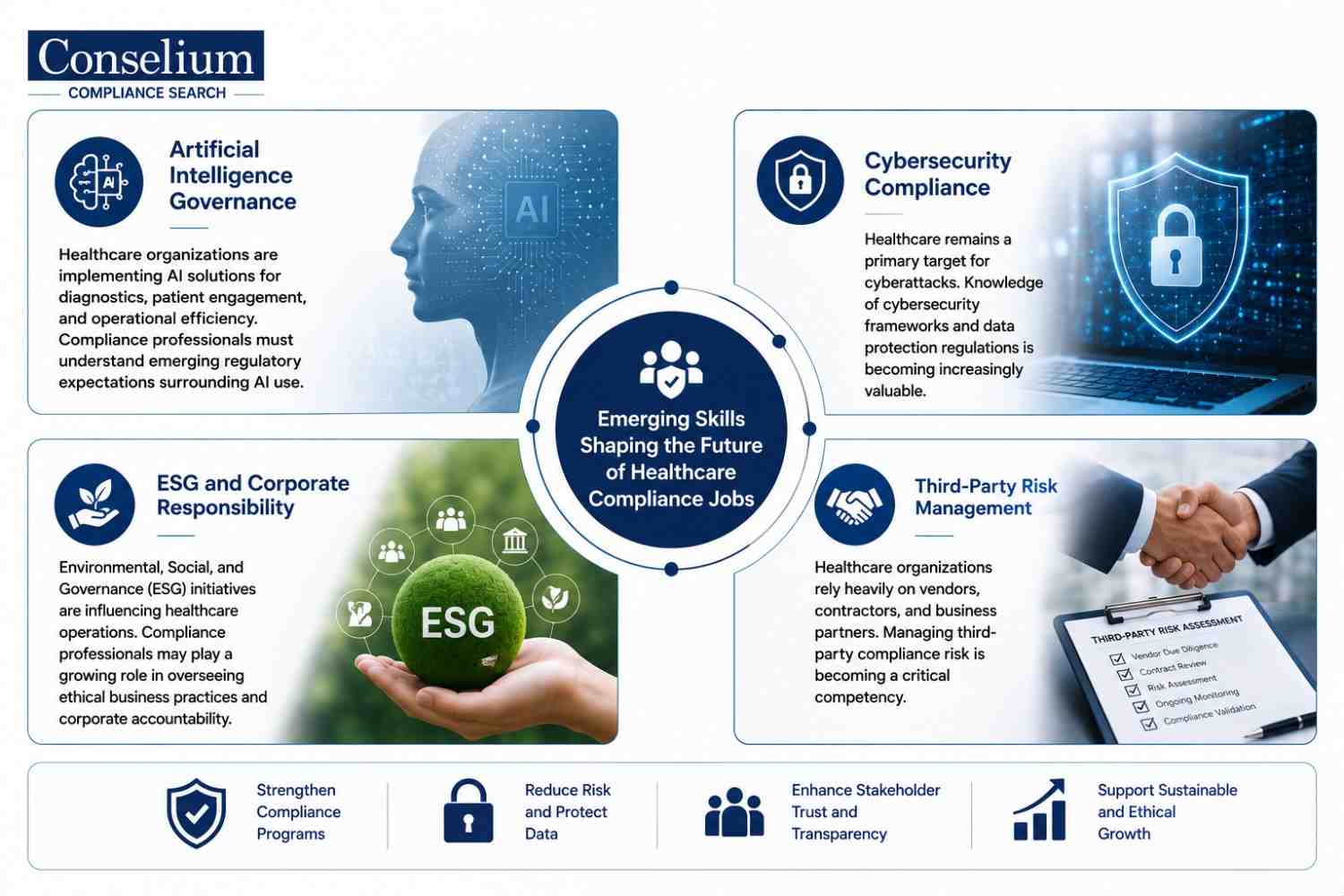
The healthcare compliance profession continues to evolve rapidly. Employers increasingly seek candidates with expertise in emerging areas such as:
Artificial Intelligence Governance
Healthcare organizations are implementing AI solutions for diagnostics, patient engagement, and operational efficiency. Compliance professionals must understand emerging regulatory expectations surrounding AI use.
Cybersecurity Compliance
Healthcare remains a primary target for cyberattacks. Knowledge of cybersecurity frameworks and data protection regulations is becoming increasingly valuable.
ESG and Corporate Responsibility
Environmental, Social, and Governance (ESG) initiatives are influencing healthcare operations. Compliance professionals may play a growing role in overseeing ethical business practices and corporate accountability.
Third-Party Risk Management
Healthcare organizations rely heavily on vendors, contractors, and business partners. Managing third-party compliance risk is becoming a critical competency.
How Employers Evaluate Candidates for Healthcare Compliance Jobs
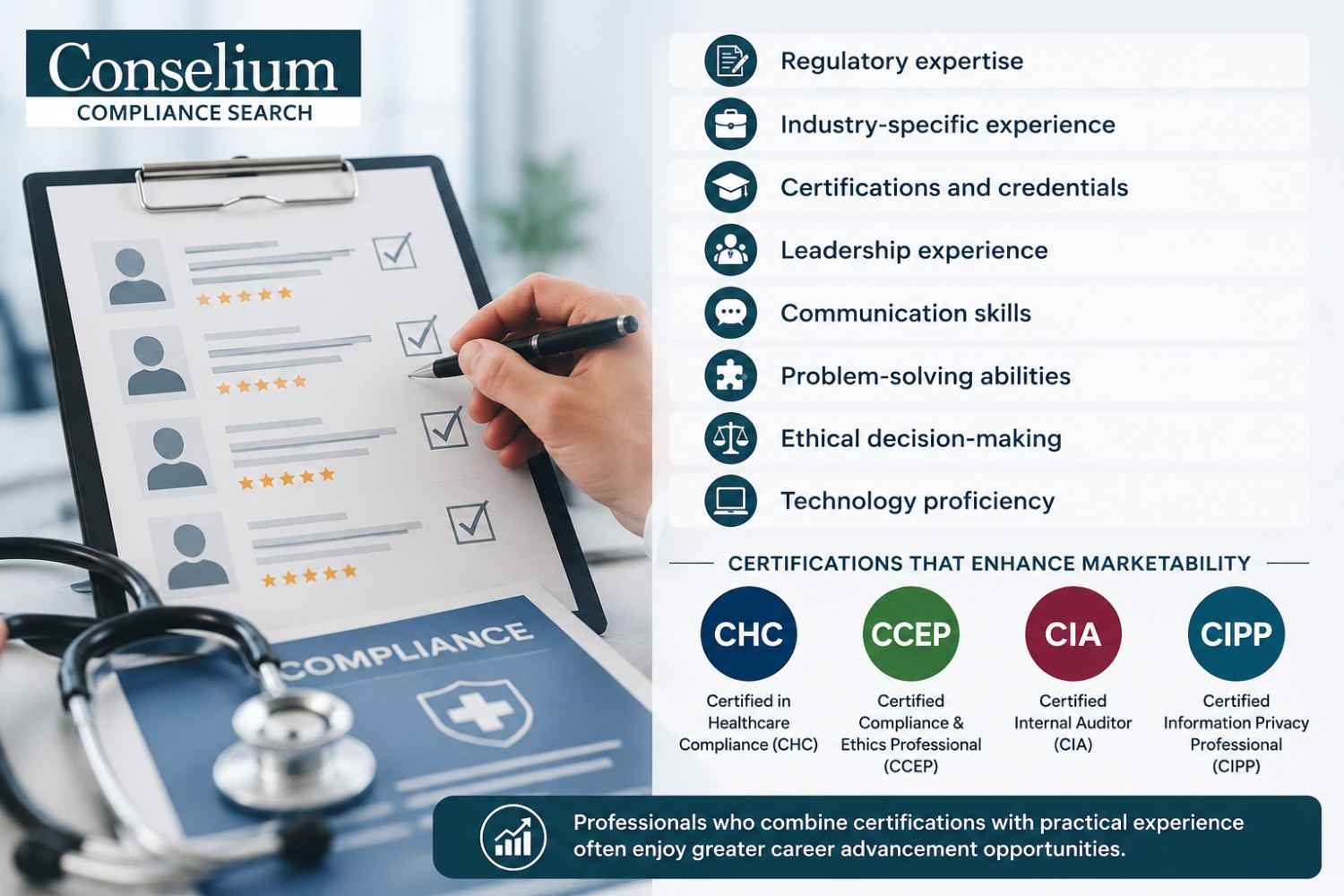
Healthcare employers typically assess candidates based on:
- Regulatory expertise
- Industry-specific experience
- Certifications and credentials
- Leadership experience
- Communication skills
- Problem-solving abilities
- Ethical decision-making
- Technology proficiency
Common certifications that enhance marketability include:
- Certified in Healthcare Compliance (CHC)
- Certified Compliance & Ethics Professional (CCEP)
- Certified Internal Auditor (CIA)
- Certified Information Privacy Professional (CIPP)
Professionals who combine certifications with practical experience often enjoy greater career advancement opportunities.
Why Work with Specialized Healthcare Compliance Recruiters?
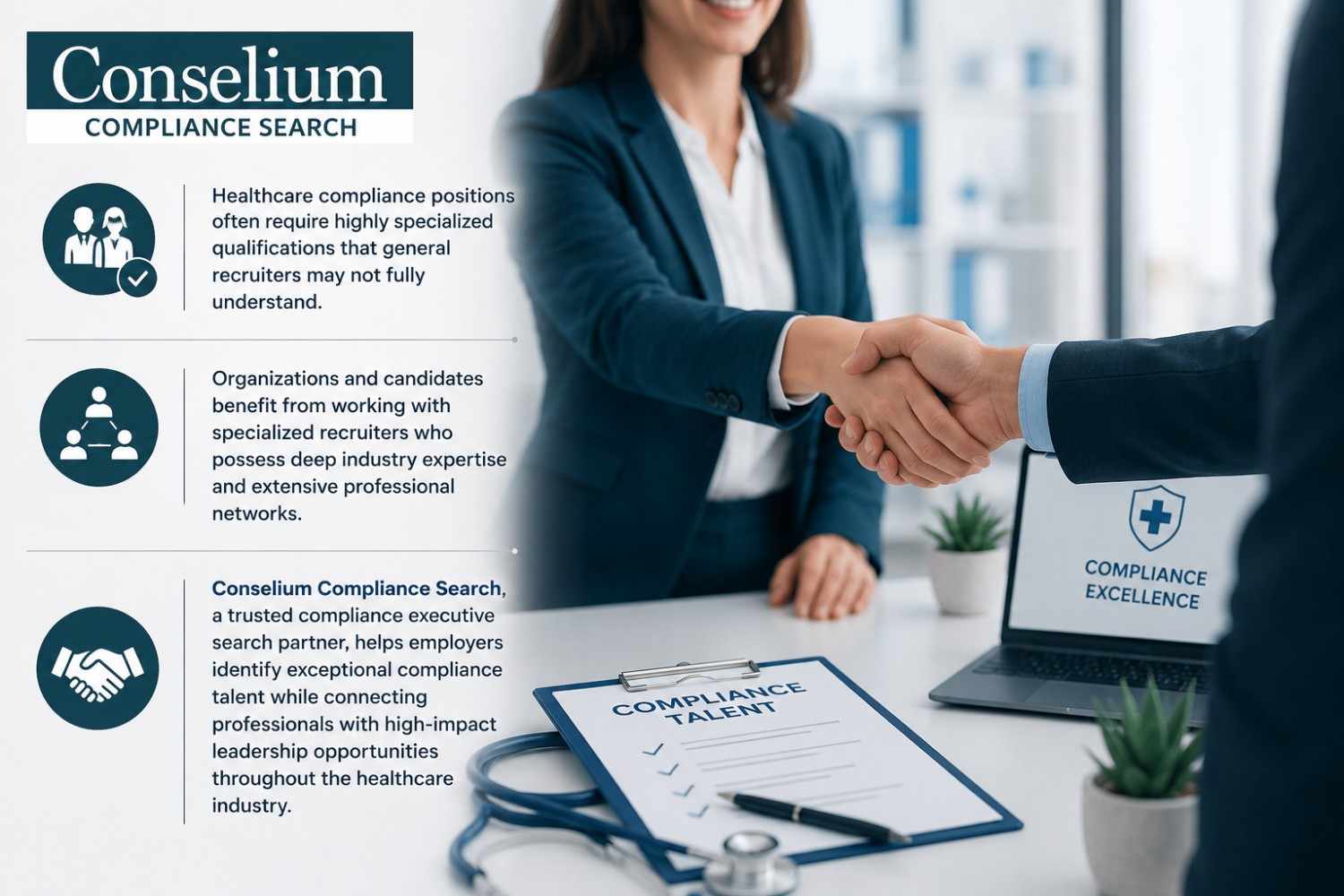
Healthcare compliance positions often require highly specialized qualifications that general recruiters may not fully understand.
Organizations and candidates benefit from working with specialized recruiters who possess deep industry expertise and extensive professional networks.
Conselium Compliance Search, a trusted compliance executive search partner, helps employers identify exceptional compliance talent while connecting professionals with high-impact leadership opportunities throughout the healthcare industry.
Advance Your Healthcare Compliance Career Today
Whether you are seeking your next leadership opportunity or looking to build a high-performing compliance team, specialized recruiting expertise can help you achieve your goals faster and more effectively.
Contact our healthcare compliance recruiting specialists today to learn how Conselium can help you navigate the evolving healthcare compliance landscape and connect with exceptional opportunities.
Frequently Asked Questions (FAQs)
What qualifications are required for healthcare compliance jobs?
Most healthcare compliance positions require experience with healthcare regulations, compliance program management, auditing, investigations, and risk assessment. Relevant certifications can strengthen qualifications.
Are healthcare compliance jobs in demand?
Yes. Healthcare organizations face increasing regulatory requirements, creating strong demand for skilled compliance professionals across hospitals, pharmaceutical companies, insurers, and healthcare technology firms.
Which healthcare compliance skills are most valuable?
Employers highly value regulatory expertise, risk management, auditing, investigations, data analytics, privacy compliance, communication, leadership, and ethical decision-making.
Do healthcare compliance professionals need certifications?
While not always required, certifications such as CHC, CCEP, CIA, and CIPP often improve career prospects and demonstrate professional credibility.
What industries hire healthcare compliance professionals?
Healthcare compliance professionals work in hospitals, health systems, pharmaceutical companies, medical device manufacturers, insurance providers, healthcare technology companies, and consulting firms.
How can specialized recruiters help with healthcare compliance careers?
Specialized recruiters provide access to exclusive opportunities, industry insights, career guidance, and connections with employers seeking highly qualified compliance professionals.
Published by Conselium Executive Search, the global leader in compliance search.