

In today’s highly regulated business environment, compliance is no longer limited to checking policies or responding to regulatory concerns after they arise. Organizations across healthcare, pharmaceuticals, financial services, biotechnology, medical devices, manufacturing, energy, and other regulated industries need strong compliance leadership to identify risks, support ethical decision-making, and maintain effective controls.
At the center of these efforts is the Compliance Director. This senior professional helps develop and oversee compliance programs, monitor regulatory requirements, assess risk, educate employees, investigate concerns, and advise business leaders. The role also requires the ability to understand how compliance decisions affect day-to-day operations and long-term business objectives.
For organizations seeking specialized expertise in this area, Conselium Compliance Search’s specialized compliance executive search services provide access to compliance-focused recruiting expertise and a professional network built around compliance and privacy talent. Conselium states that it exclusively recruits compliance and privacy professionals, from manager-level positions through executive roles.
What Is a Compliance Director?
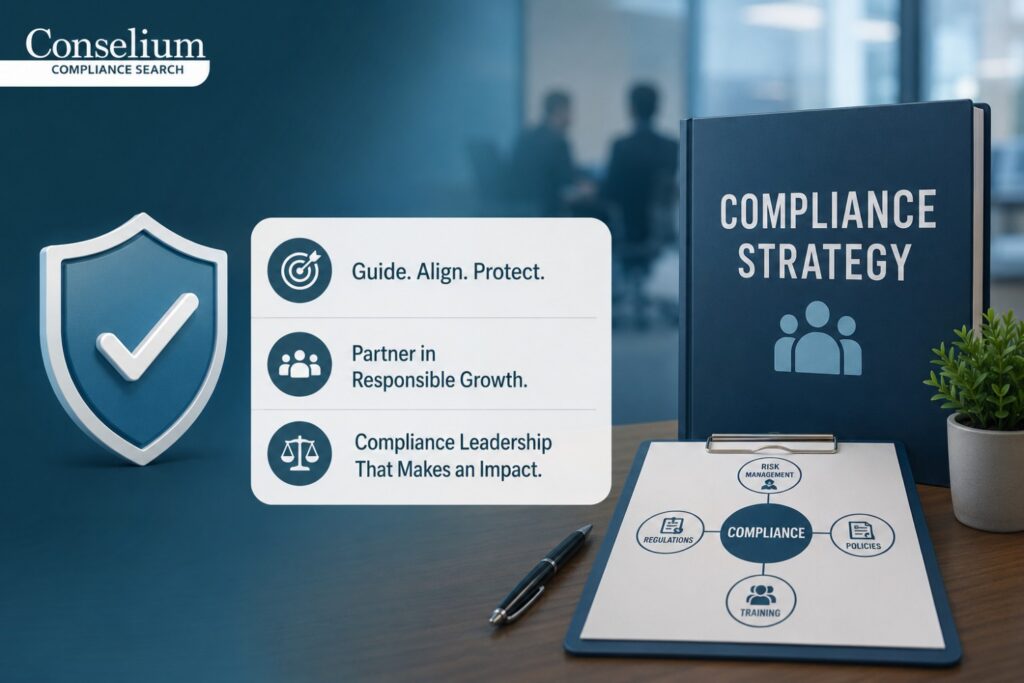
A Compliance Director is a senior-level professional responsible for developing, implementing, and overseeing an organization’s compliance strategy. The exact scope of the position depends on the company’s industry, size, regulatory environment, geographic reach, and organizational structure.
The role commonly involves working with senior executives, legal teams, risk management, internal audit, human resources, finance, operations, and other business functions.
A modern Compliance Director is not simply a policy enforcer. The position is increasingly strategic, requiring the ability to identify emerging risks, communicate complex regulatory requirements, and help leadership make responsible business decisions.
A real-world Compliance Director role in the pharmaceutical sector, for example, can involve serving as a primary compliance liaison to business leadership, supporting business initiatives, developing strategies aligned with business goals, and partnering with legal and regulatory functions.
What Are the Key Duties of a Compliance Director?
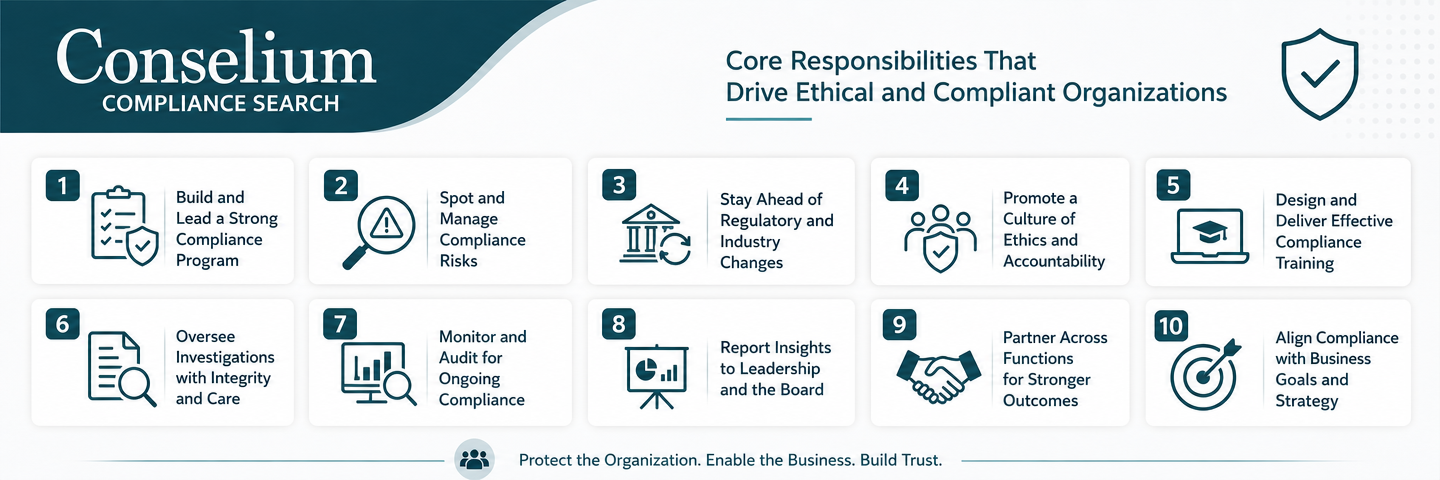
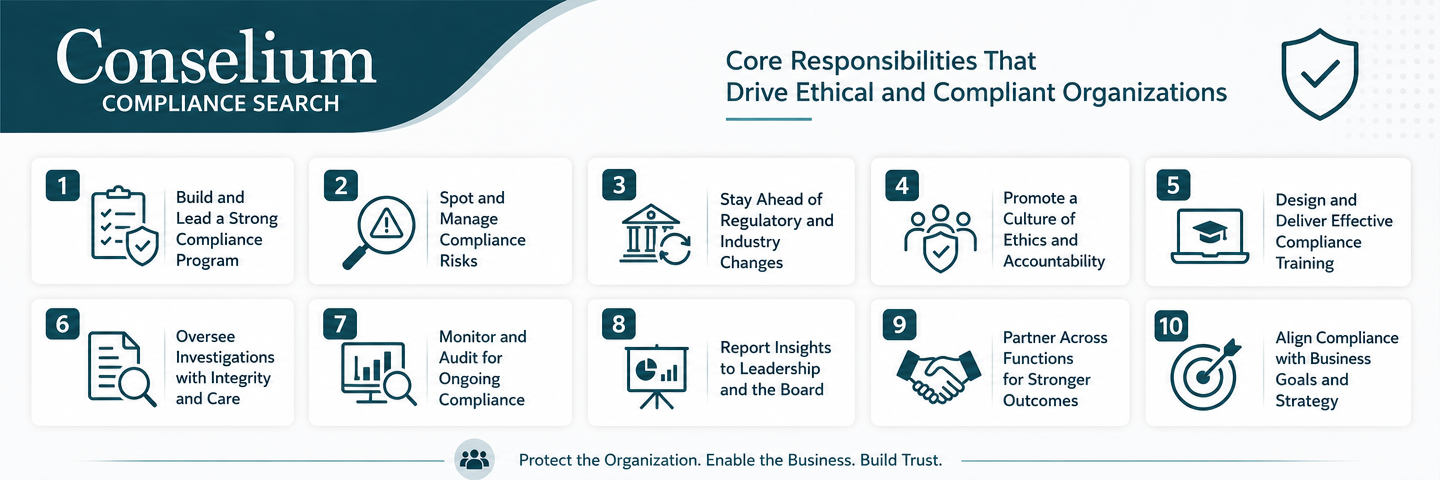
1. Developing and Overseeing the Compliance Program
One of the most important responsibilities of a Compliance Director is managing the organization’s overall compliance program.
This can include developing and maintaining:
- Compliance policies and procedures
- Internal controls
- Monitoring processes
- Risk assessment frameworks
- Reporting mechanisms
- Training programs
- Compliance documentation
- Remediation processes
The Compliance Director must also determine whether the program is working effectively in practice. A policy may look comprehensive on paper, but its value depends on whether employees understand it, follow it, and know how to report potential concerns.
2. Identifying and Managing Compliance Risks
Risk assessment is another core duty. Compliance Directors need to understand where regulatory or ethical problems could occur before those problems become significant business issues.
This requires reviewing business activities, regulatory obligations, operational processes, third-party relationships, and other potential sources of exposure.
A strong Compliance Director asks questions such as:
- Where could the organization violate a regulation or internal policy?
- Which business activities present the greatest compliance risk?
- Are existing controls working?
- Have regulatory expectations changed?
- What risks are emerging because of new technology or business expansion?
The answers help leadership prioritize resources and address vulnerabilities proactively.
3. Monitoring Regulatory and Industry Changes
Regulations can change quickly, particularly in highly regulated industries. Compliance Directors therefore need to remain informed about new laws, regulatory guidance, enforcement trends, and industry expectations.
The responsibility goes beyond simply knowing that a regulation changed. The Compliance Director must determine what the change means for the organization.
For example, a regulatory development could require changes to employee training, documentation, internal controls, third-party oversight, reporting procedures, or business practices.
This ability to translate regulatory requirements into practical business actions is an essential leadership skill.
4. Building a Culture of Ethics and Accountability
Compliance is closely connected to corporate culture. Employees are more likely to follow policies when organizational leaders consistently demonstrate that ethical conduct matters.
A Compliance Director helps establish this culture by communicating expectations, supporting ethical decision-making, encouraging employees to raise concerns, and promoting accountability.
The goal is to create an environment where employees understand that compliance is part of their responsibility rather than simply the responsibility of the compliance department.
This cultural role is particularly important when employees face difficult decisions involving customers, vendors, business partners, sales activities, financial transactions, or regulatory requirements.
5. Developing Compliance Training
Policies cannot protect an organization if employees do not understand them.
Compliance Directors therefore oversee training and education programs designed to make regulatory and ethical expectations clear. Depending on the organization, training may cover subjects such as conflicts of interest, anti-bribery requirements, privacy, data protection, healthcare regulations, financial regulations, reporting obligations, and the company’s code of conduct.
Effective training should be relevant to an employee’s actual responsibilities. A senior executive, sales professional, healthcare employee, and finance specialist may encounter very different compliance risks.
Compliance Directors should also evaluate whether training is effective and update programs when regulations, policies, or business activities change.
6. Overseeing Compliance Investigations
When employees report suspected misconduct or policy violations, the Compliance Director may oversee or coordinate investigations.
Potential issues can include conflicts of interest, fraud, inappropriate business conduct, regulatory violations, harassment-related compliance concerns, third-party issues, or violations of internal policies.
Investigations should be handled carefully and consistently. Depending on the nature of the issue, the Compliance Director may coordinate with legal counsel, human resources, internal audit, security, or senior management.
The objective is to establish facts, protect confidentiality where appropriate, document findings, determine corrective action, and reduce the likelihood of similar problems occurring again.
7. Monitoring and Auditing Compliance Activities
Compliance Directors also need visibility into whether employees and business units are actually following established requirements.
Monitoring and auditing activities can include reviewing transactions, analyzing data, assessing controls, conducting interviews, evaluating documentation, and identifying unusual patterns.
Some compliance functions increasingly use technology and analytics to make monitoring more efficient.
For example, data can help identify potential anomalies that deserve further review. Technology can also support training management, policy tracking, compliance reporting, investigation documentation, and other administrative activities.
However, technology does not replace professional judgment. Compliance leaders still need to understand the underlying business context and determine how potential issues should be addressed.
8. Reporting to Senior Leadership and the Board
A Compliance Director must be able to communicate effectively with senior leadership.
Executives and boards need clear information about the organization’s compliance environment, including significant risks, investigation trends, monitoring results, regulatory developments, training performance, and remediation activities.
Strong reporting should distinguish between routine compliance activity and issues requiring immediate attention.
The ability to communicate complex compliance information in a concise and business-focused way is therefore critical. Senior leaders need to understand not only what the compliance issue is, but also why it matters and what action may be necessary.
9. Collaborating Across Business Functions
Compliance does not operate in isolation.
A Compliance Director may work with legal, finance, HR, information security, procurement, sales, marketing, operations, internal audit, and executive leadership.
Cross-functional collaboration helps ensure that compliance requirements are incorporated into business processes instead of being treated as separate administrative obligations.
For example, when a company launches a new product or enters a new market, the Compliance Director may work with multiple departments to identify regulatory requirements and establish appropriate controls before implementation.
10. Aligning Compliance With Business Strategy
One of the defining characteristics of the modern Compliance Director is strategic thinking.
Compliance should protect the organization while enabling responsible business activity. That means compliance leaders need to understand the company’s goals, operating model, customers, products, markets, and competitive environment.
A Compliance Director who understands the business can provide more practical guidance. Instead of simply saying that an activity creates risk, the leader can help identify ways to manage that risk while still supporting legitimate business objectives.
This is why many organizations increasingly view compliance as a strategic function rather than a purely administrative one.
What Skills Should a Modern Compliance Director Have?
The responsibilities of the position require a combination of technical expertise and leadership capabilities.
Important skills include:
- Regulatory and industry knowledge
- Risk assessment and management
- Strategic thinking
- Leadership and team management
- Communication and presentation skills
- Ethical judgment
- Investigation experience
- Analytical thinking
- Policy development
- Training and education
- Cross-functional collaboration
- Adaptability
- Technology awareness
The right combination depends on the industry. A healthcare Compliance Director may need deep knowledge of healthcare regulations, while a financial services organization may prioritize expertise in financial regulatory requirements and risk controls.
Why Does Hiring the Right Compliance Director Matter?
A compliance program is only as effective as the people responsible for implementing and managing it.
Hiring an experienced Compliance Director can help an organization establish stronger oversight, identify risks earlier, improve employee awareness, and provide leadership with better visibility into compliance performance.
Conversely, hiring someone without the necessary industry knowledge, leadership ability, or communication skills can create significant challenges. A technically knowledgeable professional may struggle to influence business leaders, while a strong executive without sufficient regulatory expertise may fail to identify important compliance risks.
Organizations should therefore evaluate both technical qualifications and leadership capabilities when selecting a Compliance Director.
Companies looking for experienced Compliance Director recruitment and executive search support can use specialized search expertise to identify candidates whose background matches the organization’s industry and requirements. Conselium has published Compliance Director searches involving responsibilities such as business partnership, compliance strategy, stakeholder communication, and collaboration with legal and regulatory teams.
How Can Companies Find a Qualified Compliance Director?
Finding the right compliance leader can be challenging because qualified professionals often have specialized industry experience and are already employed.
A specialized compliance search can help organizations identify candidates based on factors such as:
- Industry experience
- Regulatory knowledge
- Leadership history
- Geographic requirements
- Organizational culture
- Functional expertise
- Communication skills
- Business experience
Conselium reports that its recruiting work focuses exclusively on compliance and privacy and includes positions from managers through senior executives. Its stated client industries include pharmaceuticals, biotechnology, healthcare, banking, financial services, medical devices, and energy.
Frequently Asked Questions About Compliance Director Duties
What does a Compliance Director do?
A Compliance Director develops and oversees an organization’s compliance program, assesses regulatory risks, monitors requirements, manages training, supports investigations, evaluates controls, and communicates important compliance matters to senior leadership.
What are the most important duties of a Compliance Director?
The key duties include compliance program management, risk assessment, regulatory monitoring, employee training, compliance monitoring, investigations, reporting, policy development, and promoting an ethical culture.
What skills does a Compliance Director need?
A Compliance Director needs regulatory knowledge, risk management expertise, leadership, communication, analytical thinking, ethical judgment, investigation skills, and the ability to work effectively with different business functions.
Why is a Compliance Director important to a business?
A Compliance Director helps an organization identify regulatory and ethical risks, maintain effective compliance controls, promote accountability, and provide leadership with information needed to make responsible business decisions.
What industries hire Compliance Directors?
Compliance Directors are commonly needed in highly regulated sectors such as healthcare, pharmaceuticals, biotechnology, financial services, banking, medical devices, energy, insurance, and manufacturing.
Does a Compliance Director work with senior leadership?
Yes. Compliance Directors commonly work with executives and other senior stakeholders to communicate compliance risks, advise on business initiatives, report monitoring results, and support effective governance. The exact reporting structure varies by organization.
How can a company hire a qualified Compliance Director?
Companies can work with specialized compliance recruiters or executive search firms that understand the compliance talent market and can identify candidates based on industry experience, technical expertise, leadership ability, and organizational fit.
Final Thoughts
The modern Compliance Director is much more than a person responsible for enforcing company policies. This role combines regulatory knowledge, risk management, ethical leadership, employee education, investigations, monitoring, reporting, and strategic business partnership.
As regulations become more complex and organizations operate across increasingly interconnected markets, effective compliance leadership can help businesses respond to risk while maintaining trust and supporting responsible growth.
For companies searching for specialized compliance talent, Connect with a compliance officer recruiting team at Conselium Compliance Search to discuss current or future compliance hiring needs. Conselium positions its search practice around compliance and privacy recruiting and provides specialized support for organizations seeking compliance professionals.
Published by Conselium Executive Search, the global leader in compliance search.